What is Herniated Disc?
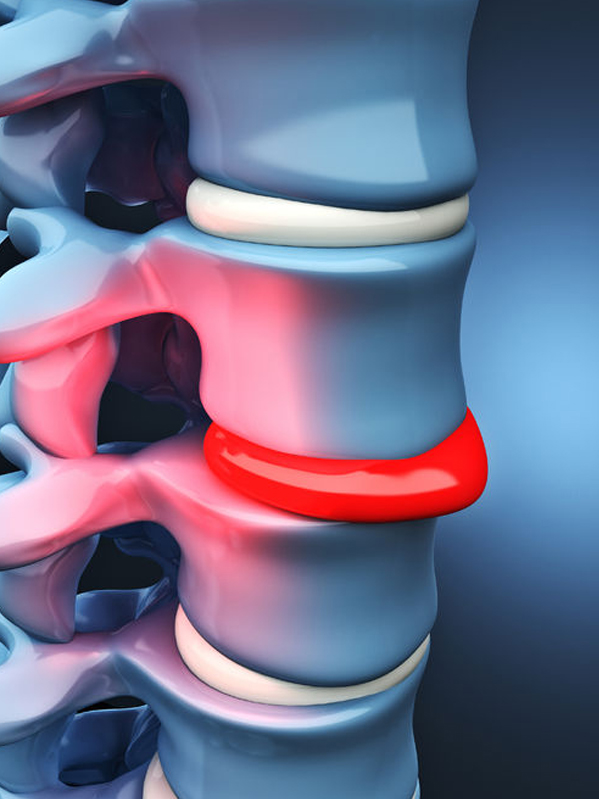
A Herniated Disc, sometimes referred to as a slipped or bulging disc, is one of the most common spine issues for patients all over the world. A herniated disc occurs throughout the different points of the spine, including the cervical spine (neck), the lumbar spine (lower back), and even at the thoracic area (chest).
A herniated disc occurs when the soft, inner center of a spinal disc, pushes out into the spinal canal, due to some kind of tear or rupture in the tough outer fibers of the spinal casing.
Symptoms
Most often the symptoms of a herniated disc are highly dependent upon where in the spine the herniation occurs. In some cases, a herniated disc may not present any symptoms at all, while in other cases pain and numbness are common as result of damage to nearby nerves. If your herniated disc occurs:
Causes
Herniated discs are very common amongst adults in the US. They most often occur as a result of disc degeneration, or the gradual wear and tear of the discs due to age. Over time, the odds of a tear or rupture will increase greatly. Other causes include:
- Excess Weight – Puts extra strain on the spinal column and discs.
- Injury or Trauma – Often while lifting objects or some type of collision.
- Genetics – Some individuals are genetically more likely to suffer from a herniated disc.

Treatment
Most patients don't require surgery. Some common non-surgical options include:
For those with more severe herniations, surgery might be needed. Dr. Varma recommends patients undergo a Minimally-Invasive Microdiscectomy. Learn more about it here.
- Physical therapy
- Medication including:
- Anti-Inflammatory Drugs
- Epidural Injections & Corticosteroids