
What is Sciatica?
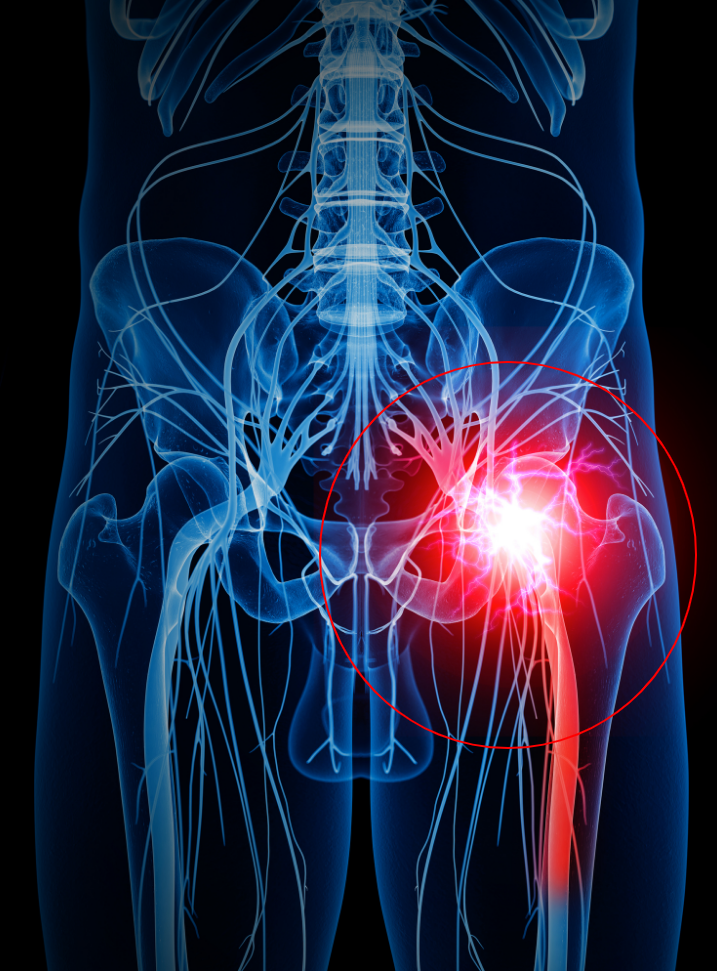
Sciatica is a condition in which pain radiates along the sciatic nerve, branching out from the lower back, through the hips, buttocks, and down each of our legs. In most cases, sciatica affects one side of the body at a time.
Sciatica is commonly associated with a herniated disc or bone spur along the spine – as a byproduct of spinal stenosis (narrowing of the spinal canal). When this narrowing occurs, it causes compression of the sciatic nerve, leading to pain, numbness, and other conditions affecting the legs and lower extremities.
Symptoms
Sciatica is characterized by pain that radiates down from your lower spine, down to your buttocks, and along the legs. Those who suffer from sciatica are likely to feel pain and discomfort down the entire nerve pathway. In addition to moderate to severe pain, other symptoms include:
Causes of Sciatica
Sciatica occurs when the sciatic nerve becomes compressed or pinched – generally as a result of a herniated disc, bone spur, or other reasons for spinal stenosis. In some, rarer instances, however, the sciatic nerve can also be compressed by the growth of a tumor or even as a byproduct of a condition like diabetes.
In addition, there are certain risk factors that have been known to cause sciatica, these include:
- Age – As we age, and the spine experiences normal wear and tear, discs begin to degenerate, herniations occur, and bone spurs develop.
- Weight Issues – Being overweight or obese increases the strain put on the spine and spinal discs, triggering sciatica.
- Lifestyle – In the event you work a job that requires you to lift heavy objects, move your back in awkward ways, or sit for long periods at a time – whether it be while driving or at a desk, this is known to cause sciatica to develop. Those who live a sedentary lifestyle are far more likely to develop sciatica.
- Diabetes – Excess sugar intake and your body’s utilization of that sugar can increase your risk of nerve damage.
Treatment
Non-Surgical Options
Once you have been diagnosed with sciatica, it is important to seek treatment.
- Physical Therapy
- Medication – Anti-Inflammatory drugs, pain relievers, muscle relaxers, anti-depressants, and anti-seizure medications.
- Spinal Injections – Corticosteroids for inflammation and pain relief.
Surgical Options
Like most spinal surgery, this is only reserved for instances in which non-invasive methods are ineffective, and surgery is rarely necessary for sciatica treatment. Generally, surgery is used in the instances in which the compressed nerve has caused significant pain, weakness, or even bowel & bladder dysfunction.
Contact Dr. Varma today for a one on one consultation and a more in-depth diagnosis.
- Decompression Surgery
- Discectomy Surgery – to remove the herniated disc that may be causing the compression.