
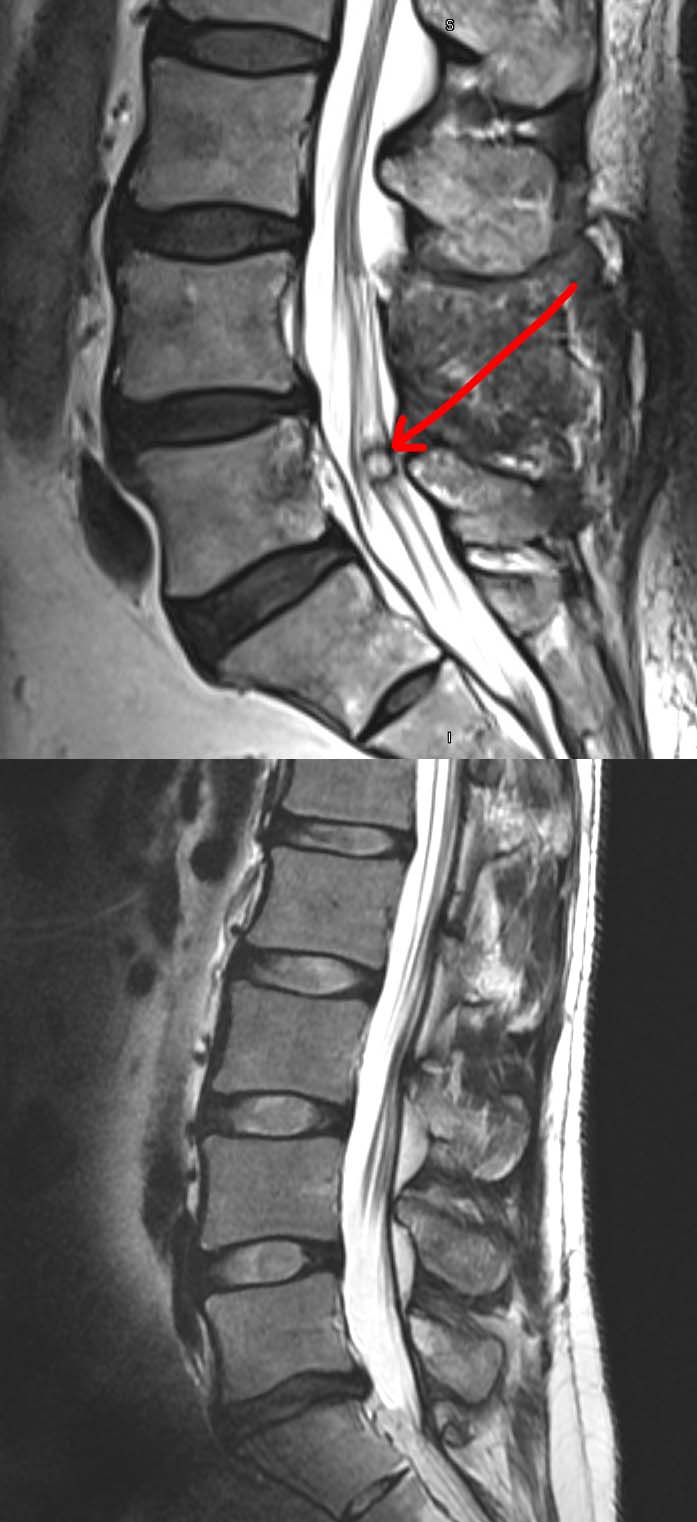
What is Synovial Cyst of the Spine?
A synovial cyst is a fluid-filled sac that develops on a patient’s spinal cord. It is sometimes called a facet synovial cyst, as it is the result of degeneration of the facet joint (joint at the intersection of vertebrae) of the vertebrae. These cysts are most common in the lower, lumbar portion of the spine.
Symptoms
When a synovial cyst or facet synovial cyst occurs, there are often very few noticeable symptoms during the initial period of incidence. Generally, patients will remain asymptomatic until the cyst grows large enough to cause more interference within the spinal area – at which point the synovial cyst will put pressure on the spinal cord & nerves, causing patients to begin showing signs of spinal stenosis (narrowing of the spinal canal), including:
These pain symptoms will often increase when in a standing position.
Causes
A facet synovial cyst can develop in a number of different ways. As the facet joint of the vertebrae begins to degenerate over time or as a result of injury or some form of trauma, it produces excess fluid, much more so than that of a healthy joint. This excess fluid provides extra lubrication to the joint, assisting it in its movements. However, this excess fluid will eventually build up and become trapped within the synovial lining of the joint – forming a cyst.
The cyst only becomes an issue once it grows large enough to begin putting excess pressure on the nerves. Patients should be aware of any pain, numbness or tingling in their legs, or worsening low back pain.
Minimally-Invasive Lumbar Microdecompression
The presence of a synovial cyst is known to cause compression in the lumbar spine. Therefore, Microdecompression surgery may be necessary.
Treatment
Non-Surgical Options
In many instances, especially upon early detection, a synovial cyst will not cause any symptoms, nor will it have any adverse effects overall. In these instances, it may be best to leave it alone, and closely monitor its size – when the cyst grows large enough to put pressure on the nerves, treatment becomes necessary.
- Pain Medication – Depending on the severity of your pain symptoms, either prescription or OTC pain medications may be recommended.
- Physical Therapy or Lifestyle Changes – In many patients, the synovial cyst will only cause symptoms during certain activities, such as exercises involving the lower back or hamstrings. In these circumstances, a physical therapist may be able to help you to stretch, or find variations on certain movements to reduce your symptoms.
- Drainage & Steroids – Depending on the placement, as well as other factors, specific to your synovial cyst we may be able to drain the fluid from. Once the fluid is removed a second injection of steroids can be inserted into the facet joint area, as this will help reduce swelling and inflammation.
Surgical Options
In the event non-surgical options do not provide you with relief, we may recommend some type of surgical procedure. Because the cyst can cause compression to the surrounding nerves, decompression surgery may be necessary – in addition to the actual removal of the cyst itself.
- Microdecompression or Microdiscectomy – This procedure is less invasive than most other spinal surgeries and does not require any fusion of the spine. This procedure will decompress the nerve root, by removing the disc material in the area. However, the cyst may regenerate later on.
- Decompression Surgery with Spinal Fusion – This is one of the most reliable surgical measures for the treatment of a facet synovial cyst. First the cyst is removed, and the joint is fused – preventing all future motion, and the cyst from regenerating.