What is Degenerative Disc Disease?
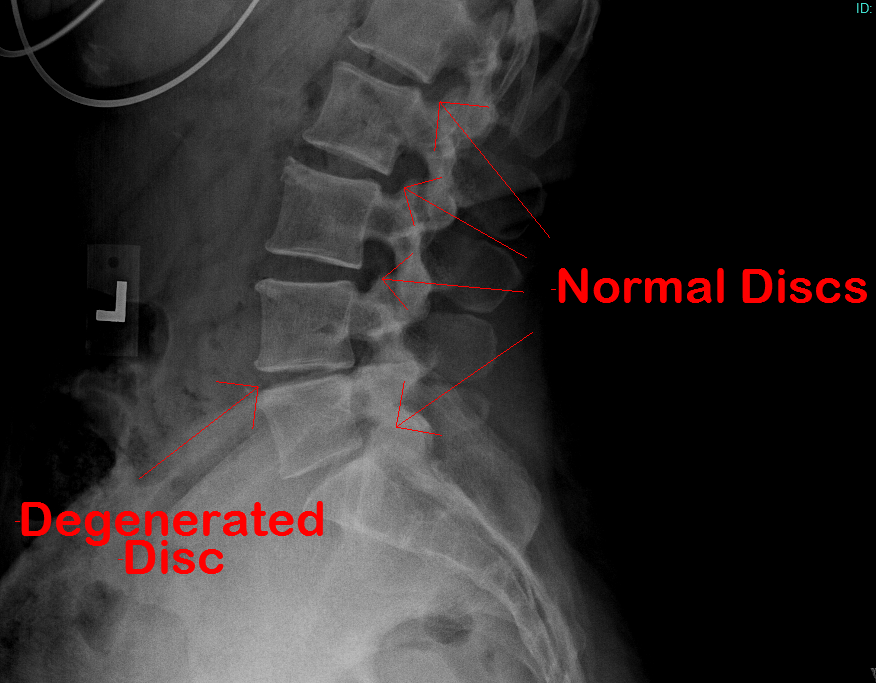
Degenerative Disc Disease is a fairly common condition in which the discs within our spine begin to wear down as a result of aging – often causing pain, amongst other symptoms.
Our spinal discs act as a source of cushioning to absorb shocks between the vertebrae of the spine. These discs allow for us to maintain flexibility in our spine, especially when we bend, twist, and move. As we age, like other areas of the body, these discs begin to break down – causing pain and discomfort.
Symptoms of Degenerative Disc Disease
Degenerative Disc Disease is characterized by a host of different symptoms, affecting mainly the back and neck. However, the specific symptoms and their source is highly dependent upon the location of the weakened disc. The most common symptoms include:
Causes
For the most part degenerative disc disease is a product of normal wear and tear on the discs as we age. In some instances, however, the discs will begin to degenerate prematurely – often set off due to some type of injury or trauma.
- Loss of Water Content: Our spinal discs are made up of a soft inner core, as well as a tough outer “shell”. When we are born, this soft inner core is made up of mostly water, but as we age, the discs slowly lose water content and get thinner over time. These thinner discs can no longer absorb shocks as well as they previously could, and less water content means less “padding” between vertebrae.
- Herniated or Damaged Discs: With the discs growing weaker over time, the stress on the spine of normal, daily movements can cause micro-tears in the outer shell. This is known to cause a great deal of pain, as the outer wall is home to a network of nerves. As these micro-tears expand, the soft inner core may push through these cracks, causing the disc to bulge or even slip out of place. This is known as a herniated or slipped disc.
Treatment
Non-Surgical Options
The goal of degenerative disc treatment is to ease the pain, and prevent any further damage or degeneration of the disc. Depending on how advanced your condition is, we might recommend a series of surgical or non-surgical treatment measures.
- Medication – For less severe disc issues, a combination of pain relievers (OTC or prescription) and anti-inflammatory drugs is recommended.
- Steroid Shots – An epidural steroid shot can help reduce inflammation, and alleviate pain.
- Physical Therapy – Exercises to improve the strength and flexibility of the muscles in the neck and back. For many the combination of physical therapy and pain medication can help provide long-term relief.
Surgical Options
For rarer, more severe disc degeneration, surgery may be necessary. Surgical options include:
Find out more about Degenerative Disc Disease treatment, by calling our office or check out our treatments area for more information.
- Decompression Surgery – Often times pain from degenerative disc disease is caused by compression of the nerves. To alleviate this pain, decompression surgery may be necessary. Depending on what is causing the compression, procedures like a Facetectomy or Foraminotomy can be performed. Sometimes these are performed in conjunction with spinal fusion.
- Discectomy – Another form of compression surgery, the minimally-invasive discectomy removes all or part of a damaged or herniated disc – smaller incisions allow for faster recovery time.
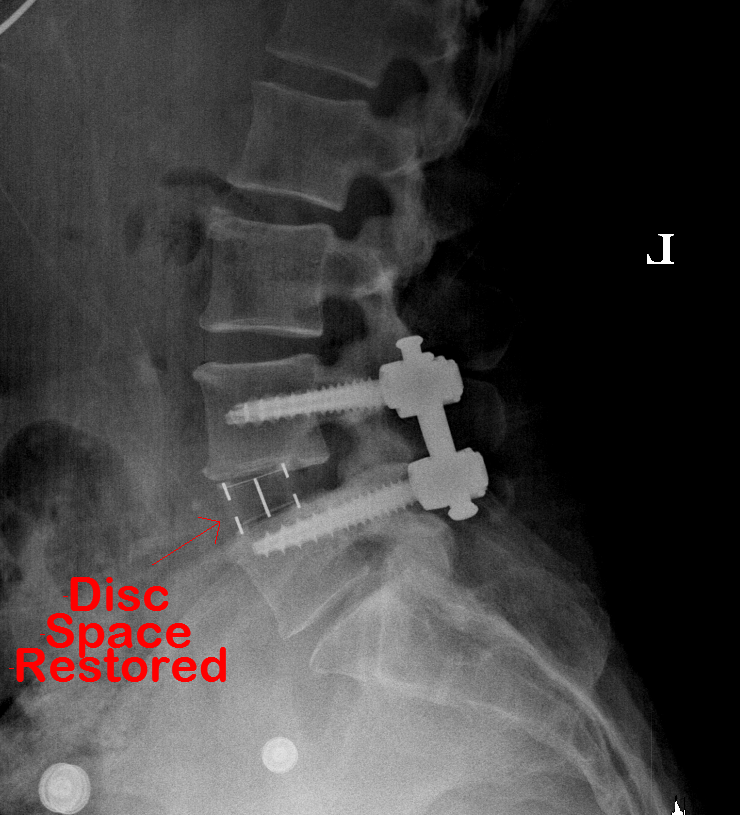
- Stabilization Surgery – Once a disc or other area of the spine is removed, there may be some instability. To stabilize the spine, we may recommend fusion surgery or the use of spinal instrumentation – cables, rods, wires, etc.