
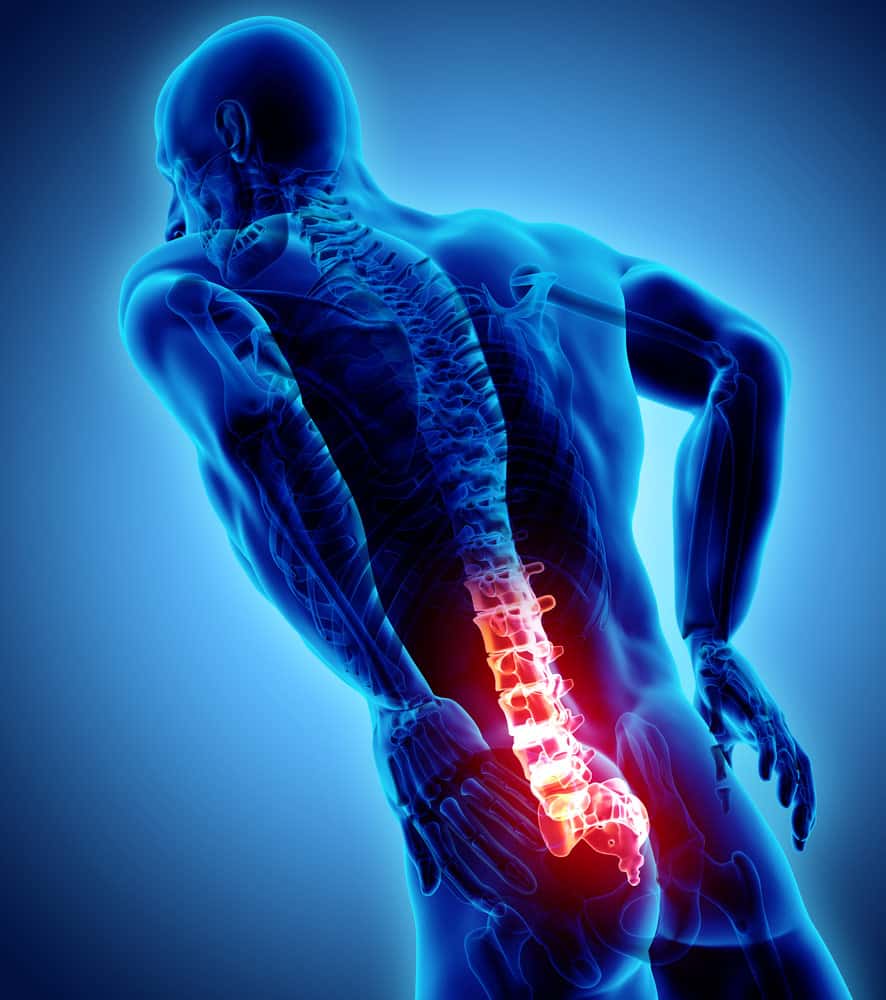
Sometimes known as an open decompression procedure, the Lumbar Laminectomy is a surgical method designed to treat patients suffering from spinal stenosis – the narrowing of the spinal canal. One of the most common conditions affecting the spinal column, spinal stenosis causes compression of the spinal cord and surrounding nerves – often leaving patients in immense pain. The compression can be caused by a number of different factors, but as we are referring to a laminectomy, the compression of the spinal cord is caused by a piece of bone tissue known as the lamina – the posterior part of the vertebra.
Why a Lumbar Laminectomy?
Spinal stenosis, and more specifically lumbar spinal stenosis, is one of the most common and most debilitating conditions affecting the spine. This compression causes issues mainly effecting the lower body extremities, some of the most common symptoms include:
A Lumbar Laminectomy may become necessary when any of the above symptoms occur, or other compression issues caused by conditions such as bone spurs, degenerative disc disease, herniated disc, sciatica, spondylosis and more.
What is a Lumbar Laminectomy?
As a result of different factors such as aging, injury, disc damage, and the normal wear and tear of the vertebra, the spinal compression we described above may occur. One way to alleviate this compression is by removing all or part of the lamina – the flat, arched piece of bone that exists on each vertebra – together forming a wall, almost as a roof or covering of the spinal canal. A laminectomy can relieve this pressure by opening up the spinal canal and relieving the compression in the effected region – this is why its also known as a decompressive laminectomy. The lumbar laminectomy is simply the removal of the lamina in the lower region of the spine, or the lumbar spine.
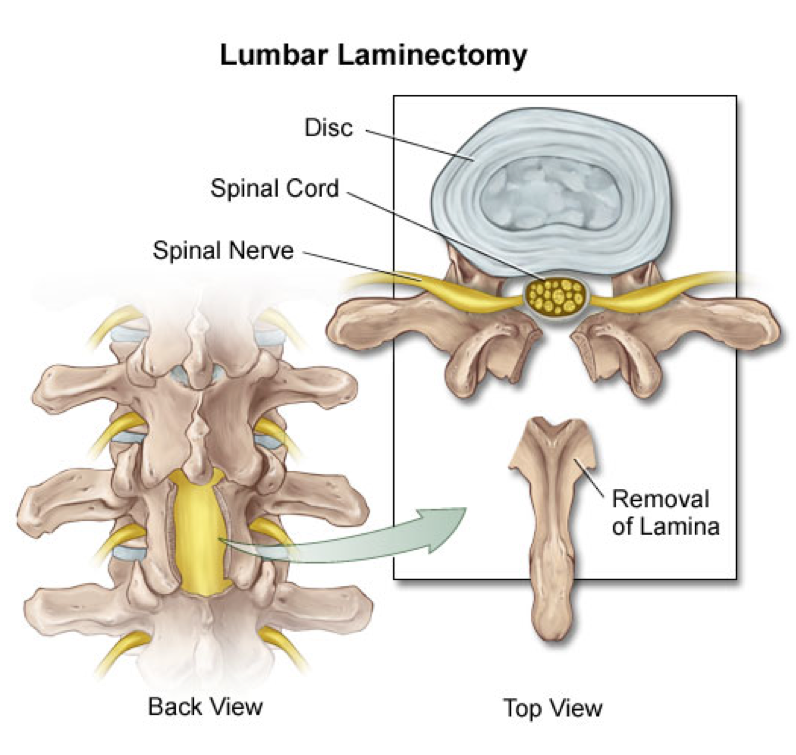
The illustration above shows the removal of the Lamina, and how it is able to relieve the compression of the spinal cord and nerves.
Treating Spinal Stenosis with the Lumbar Laminectomy
Despite being one of the city’s foremost orthopedic spine surgeons, Dr. Varma strongly believes that surgery should always be considered a final resort, when all other noninvasive methods have proven to be ineffective. Therefore, Dr. Varma will often recommend patients attempt to treat their spinal compression issues with physical therapy, certain anti-inflammatory drugs, and other methods. When these methods fail, surgery becomes the only option.
Open Compression Lumbar Laminectomy
In the lower region of the spine, known as the lumbar spine, a Lumbar Laminectomy will be performed in order to relieve compression caused by any of the factors we detailed above. The procedure is performed with an approach done from the patient’s back; therefore, the patient must lie face down for the entirety of surgery. Depending upon the size of the affected area, an incision will be made along the patient’s back, and any muscles are gently moved to the side in order to gain access to the laminae in need of correction. The laminae along the area in which the compression occurs are then cut and removed (in a laminoplasty procedure, they are not removed, but create a sort of “hinge” to provide space).
In some cases, only if needed, the patient may also require fusion to be performed in the area where the laminae were removed. The ligaments, muscles and skin tissue are all closed and sutured properly, and depending upon the extent of the procedure, the patient may be able to return home within 1 to 3 days – free of any further spinal compression and pain. For more information on the Lumbar Laminectomy, further treatment of spinal compression issues, or to schedule your own consultation, be sure to contact Dr. Varma today.