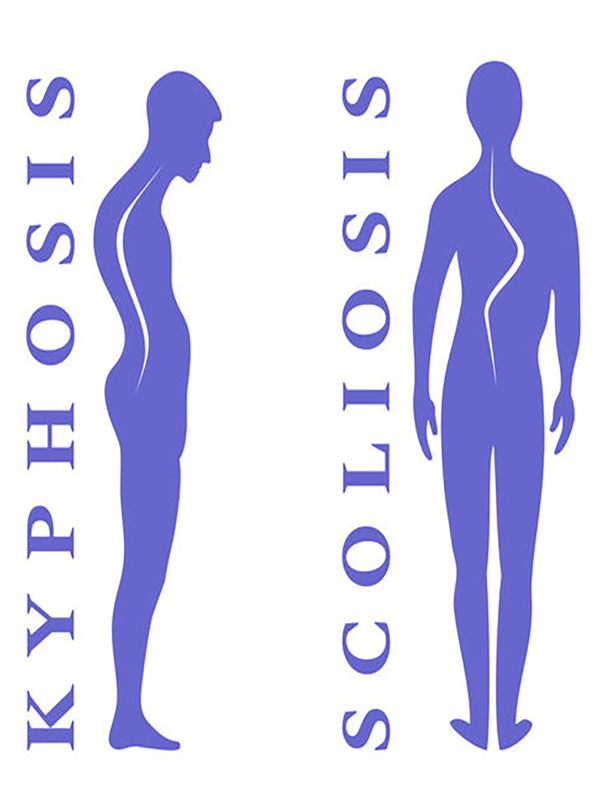
What is Kyphosis?
Kyphosis, also known as Scheuermann’s Disease, or Scheuermann’s Kyphosis, is a spinal condition, which is characterized by an abnormal, forward-facing, rounded curvature of the back. This condition is far more common than one would think, affecting approximately 6-8% of the country’s population – older women have the highest rate of Kyphosis, followed closely by children. Most kyphosis patients can be identified by a prominent hunchback and poor posture, when either sitting or standing.
Symptoms
Depending on the specific patient, and how far the condition has progressed symptoms can differ, somewhat – young children suffering from Kyphosis are often asymptomatic. Other patients will commonly experience symptoms such as:
Causes
Kyphosis occurs when there is a breakdown in the vertebrae of the spine, and deformities occur, turning them into a wedge-like shape – normally, the vertebrae are in a cylindrical shape. This deformity can occur for a variety of reasons, including:
- Birth Defects: In many cases of kyphosis, babies are born with poorly developed spinal bones. This is a major cause of kyphosis, especially in young babies and newborns.
- Compression Fractures: Due to some form of injury or trauma, the vertebrae in the spine can become crushed or broken – creating an abnormal curvature in the spine.
- Disc Degeneration: As we age, and the discs in between our vertebrae begin to breakdown over time, they dry out and shrink – creating an improper curve in the spine.
- Osteoporosis: This is one of the most common reasons for kyphosis, in older women, especially those who have taken corticosteroids for an extended period of time. As the bones thin and weaken (in some cases causing compression fractures), an abnormal curve may develop.
- Cancer & Radiology Treatment: In some spinal cancer patients, the vertebrae become very weak and are prone to compression fractures, and thus an abnormal curvature in the spine. In addition, cancer treatment such as chemotherapy or radiology, weakens the spine as well.
Physical Therapy
Physical therapy, stretching exercises, and practicing good posture can help to prevent the progression of a moderate Kyphotic curve in the spine.
Treatment
Non-Surgical Options
As with most spinal issues, we try to go through as many non-surgical options as we can to begin the treatment process, especially for young children. Some of the common non-surgical options are:
- Physical Therapy: Stretching exercises can improve spinal flexibility and alleviate back pain.
- Bracing: Especially common for children with Scheuermann’s Kyphosis, bracing helps to stop the progression of the spinal curve.
- Medication: Pain relievers – both OTC and prescription. Osteoporosis Medication – Strengthens the bones in the spine and prevents additional fractures and spinal curvature.
Surgical Options
Once these non-surgical measures are proven ineffective, surgery might be required.
For more information on all your surgical options in further detail, be sure to schedule your consultation with Dr. Varma today.
- Osteotomy: This procedure is performed in order to correct angular deformities in the spine, by cutting the bones, realigning them, and allowing them to heal. This may be combined with spinal fusion, and spinal instrumentation as well to further align the spine.
- Spinal Instrumentation Surgery & Fusion: Depending on the factors above, Dr. Varma and his team may choose to align the spine using spinal instrumentation, and/or spinal fusion. Spinal instrumentation involves implanting appliances like alignment rods, wires, cables, screws, and plates.