What is Cervical Stenosis & Myelopathy?
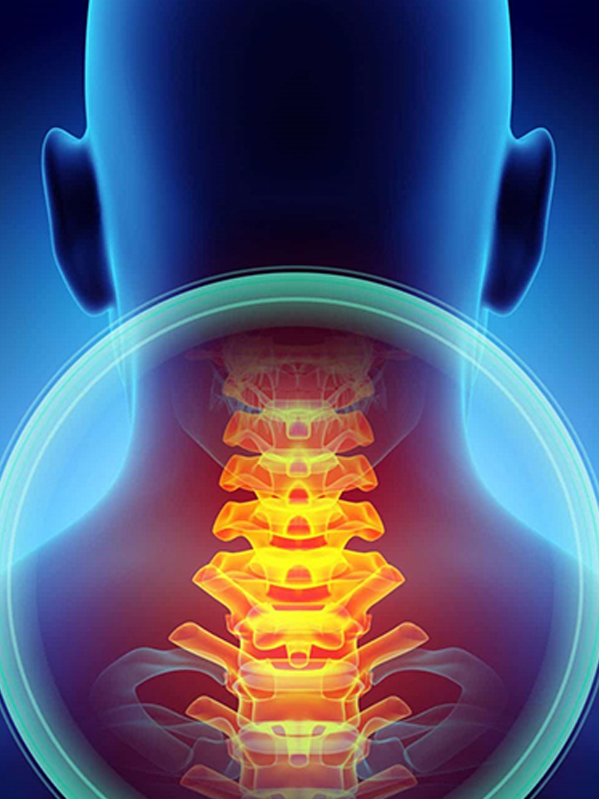
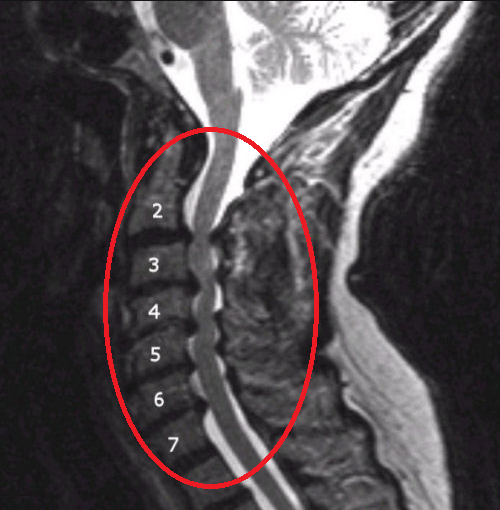
Cervical Stenosis is a relatively common condition affecting the neck region of the spine, known as the cervical area. Cervical stenosis is the narrowing of the spinal canal or the openings known as the foramina, that allow the spinal nerves to exit the spinal column. This narrowing happens for a variety of reasons, most commonly degenerative disc disease, arthritis, or other spinal compression issues. The narrowed area, and lack of space, causes compression in the spinal cord, and its surrounding nerves.
Cervical myelopathy, sometimes known as Cervical Spondylotic Myelopathy (CSM) is a condition in which the spinal cord becomes severely compressed, causing pain and other symptoms in the neck and upper part of the body. Often, as a result of the normal wear and tear of aging, the spinal discs and vertebrae begin to deteriorate and breakdown. As they deteriorate, they are forced out of alignment and become damaged, causing them to press against the spinal cord.
Symptoms
Cervical Myelopathy is a condition that often stems from Cervical Stenosis, or the narrowing of the spinal canal in the cervical region. Patients will experience symptoms similar to other cervical compression issues. Treatment is vital, as these symptoms will progressively worsen over time. The most common symptoms include:
Causes
Cervical Myelopathy is a condition that often stems from Cervical Stenosis, or the narrowing of the spinal canal in the cervical region. Patients will experience symptoms similar to other cervical compression issues. Treatment is vital, as these symptoms will progressively worsen over time. The most common symptoms include:
- Muscle spasms in neck and shoulders
- Pain in the neck, shoulders (scapula), arms, and torso.
- Cervical Radiculopathy – Nerve compression by a disc herniation, pain, burning, tingling and numbness; on the shoulders, arms, neck, and hands.
- Muscle weakness
Treatment
Non-Surgical Options
For the milder cases of Cervical Myelopathy, surgery is not required. These methods are generally used to manage symptoms and alleviate pain issues.
- Physical Therapy
- Cervical Collar or Bracing – a padded ring that wraps around the neck and is held in place with Velcro. Gives the neck muscles a rest and limits the motion of the neck so they can all heal.
- Medication – Anti-Inflammatory drugs, pain relievers, used in conjunction.
- Spinal Injections – Epidural injections and corticosteroids.
Surgical Options
For the more severe Cervical Stenosis & Myelopathy cases, that do not respond to less invasive treatment methods, surgery will become necessary. For these patient's surgery is designed to relieve the pressure on the spinal cord and nerves, and to alleviate the root cause behind the compression – for instance, a discectomy to remove an out of place disc pressing against the spinal cord.
A Cervical Laminectomy, and Fusion surgery may also be options as well, as they will help to decompress the spine. This is dependent upon your specific case as well.
Dr. Varma will provide a more specific course of treatment based on the specifics of your consultation.
- Decompression Surgery – To eliminate the compression on the spine and the surrounding nerves.
- Discectomy Surgery – To remove a damaged or deteriorated disc in order to eliminate the spinal compression.