
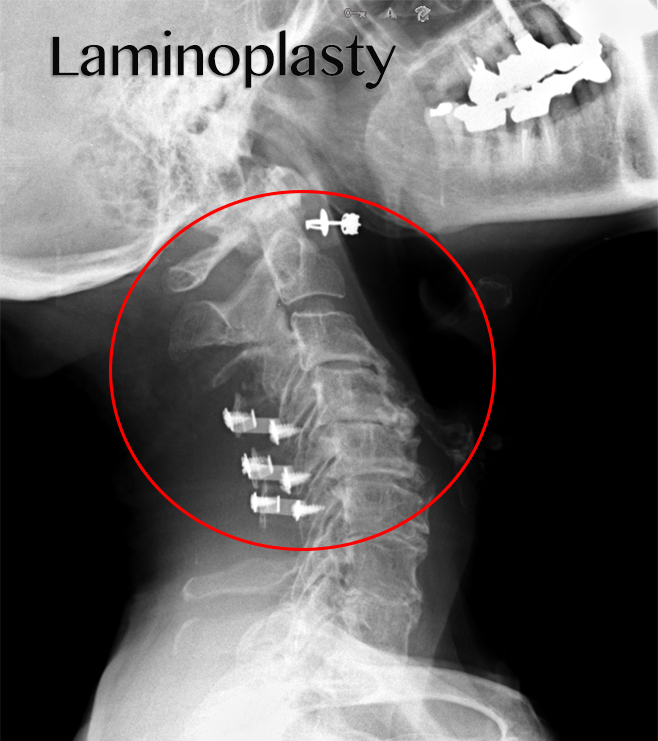
Above the spinal canal there is a small section of bone, known as the Lamina. The Lamina acts as a semi-rigid, roof-like covering for the spinal cord area. Often, this covering can prevent freedom of movement of the spinal cord, and cause compression which can result in symptoms such as pain, nerve issues, loss of movement or mobility and much more.
Benefits of the Laminoplasty
When an individual is suffering from compression conditions, surgery is often necessary. The laminoplasty is often compared to the laminectomy, another decompression procedure. However, in the laminectomy procedure, rather than creating a “hinged sunroof” for the lamina, it is completely removed. The laminoplasty offers a few important benefits over the laminectomy, including:
However, it is important to note that, despite these benefits, the laminectomy procedure does offer additional decompression, as it allows the spinal column the maximum amount of space. For those patients who are experiencing more compression, the laminectomy may be necessary.
What is Cervical Laminoplasty Surgery?
A laminoplasty is a surgical procedure that is used to alleviate the compression of the spinal cord by widening the spinal canal. This gives our spinal column additional space – helping to reduce compression and alleviate any possible pain symptoms a patient may experience.
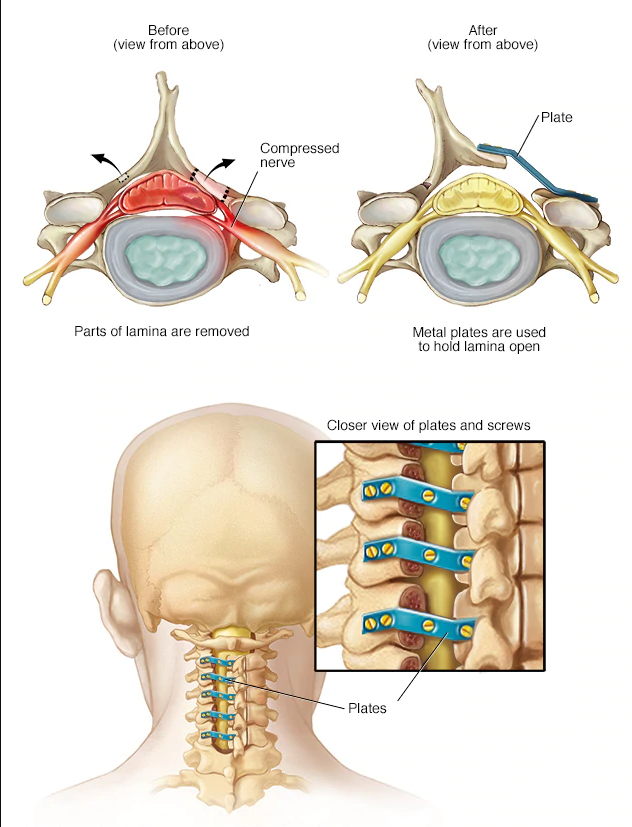
The purpose of the laminoplasty, is to create a sort of hinge at once side of the lamina, while the other side is wedged open by a bone strut or metallic plate. Essentially, we create a “sunroof” effect for the spinal canal, propping open the lamina at one end, and leaving it hinged at the other. This opening in the lamina ensures spine is no longer confined – preventing any future compression.
Treating Compression with a Cervical Laminoplasty
The cervical laminoplasty procedure is a decompression procedure that helps reduce spinal stenosis – or the narrowing of the spinal canal, causing compression on the nerves or the spinal column itself.
When spinal stenosis and spinal compression is left untreated, it will eventually lead to radiculopathy of the cervical spine – causing pain, weakness, numbness and other issues in the arms and legs.
It can also lead to permanent damage to the spinal cord known as myelopathy – causing pain, weakness, numbness and even permanent loss of function or nerve damage. Some of the more common conditions treated by Cervical Laminoplasty include:
- Cervical Spinal Stenosis
- Spondylotic Myelopathy
- Ossification of the posterior Longitudinal Ligament
The Laminoplasty Procedure
The procedure begins with an incision made down the middle of the backside of the neck, exposing the spinal column area. Having gained access to the spinal column, Dr. Varma will then make a thin cut at the meeting point of the lamina and the facet joint – the cut extends from the outer layer of the bone, to the middle layer (leaving the inner-most layer untouched).
At the other side, another, similar cut is made, however, this one cuts through the outer, middle and inner layers of the lamina. The lamina is then wedged open at the side that has been fully cut. In order to keep this side fully open we must use either a metal pressure plate or a piece of bone material.
This should provide patients with significant decompression of the spinal column, hopefully reducing their symptoms.
Following surgery, patients will have to wear a neck collar to limit the neck movement and cannot resume their daily activities until about 4-6 weeks after the decompression. There will be constant follow-ups for the first few weeks to months, to be aware of any possible complications from surgery. For more information on this procedure, other spinal procedure, or to schedule a consultation, contact Dr. Varma today.