When discussing Spinal Osteotomy surgery, its important to understand that the term often refers to an umbrella category of a number of different spinal procedures – all of which are designed to treat various spinal deformities, spinal conditions, and even injuries. Spinal Osteotomies can be performed on both adults as well as children, depending upon their spinal issues.
Benefits of a Spinal Osteotomy
In general, an Osteotomy procedure will require the removal or realignment of certain bone tissue within the spine area. This is most commonly done in order to correct an assortment of issues and provide benefits such as:
Why Spinal Osteotomy Surgery?
One of the most common reasons for an individual to undergo a Spinal Osteotomy procedure has got to be in an effort to correct certain spinal deformities or curvature issues, such as scoliosis or kyphosis. One of the main focuses of the osteotomy procedure is to restore sagittal harmony, or the “front-to-back” balance of the spine. Normally, the spine has two gentle front-to-back curves. The lumbar spine has an inward lordotic curve, while the thoracic spine has an outward kyphotic curve – these curves work together in harmony in an effort to keep the center of gravity aligned over the hips and pelvis.
However, in some cases, one of these curves might become to pronounced, and this will create a sagittal imbalance. Certain conditions in which this might occur include things like:
- Flatback Syndrome: Where the lumbar spine loses its lordotic curve, and the body’s center of gravity becomes far too forward.
- Kyphosis: As well as, Scheuermann's Kyphosis in young adults and children, is a condition in which the normal kyphotic curve of the thoracic spine increases to such a degree that the back appears hunched.
The fact is that proper alignment of the spine is vital to living a normal, pain-free life, and being able to function on a daily basis. Any condition in which the patient might experience certain issues with this may require treatment using an osteotomy procedure.
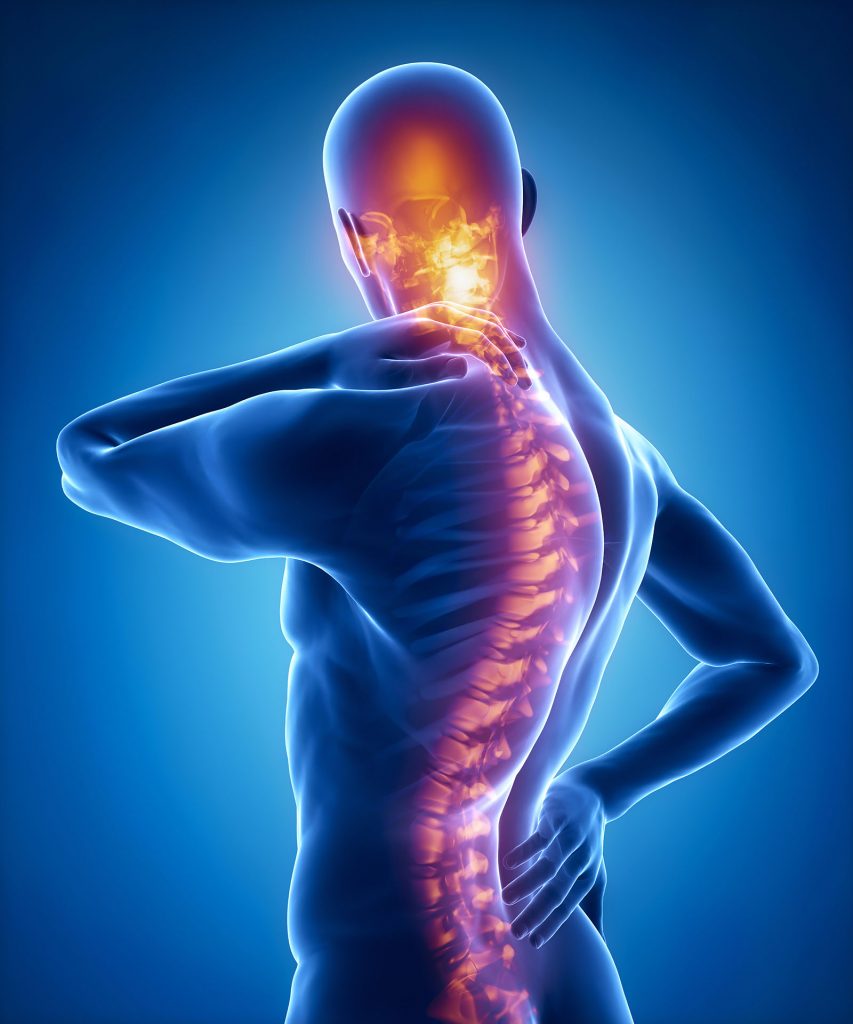
Scheuermann's Kyphosis, abnormal curvature of the upper spine, can be treated with a Spinal Osteotomy procedure.
Spinal Osteotomy Procedure
When it comes to Spinal Osteotomies, its important to understand that there are varying degrees to which the procedure can be performed depending upon the specific needs of the patient. Some important considerations to make include the location at which the spinal curvature issue might occur, the severity of the curve, and how much it must be restructured. There are 3 major types of Osteotomies that we must consider.
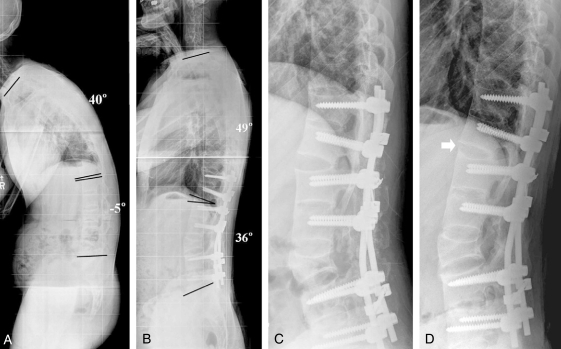
- Posterior Column Osteotomy (PCO) – The procedure begins with the patient being placed under general anesthesia, and having to lie face-down on the table, as it is a posterior entry procedure. An incision is carefully made over the spine in order to expose the bone of the spinal column. Once this occurs, as a means of stabilization, the surgeon will place screws into the vertebrae both above and beneath the area in which we are to remove the bone tissue. These specialized screws are built to be fitted with specialty rods. At this point, the unwanted bone tissue is removed – this often includes the lamina, parts of the facet joints, and more. The surgeon will then realign the vertebrae, and will insert an implant in order to create the desired correction. Once this process is completed and the spine has been realigned, specialized rods will be inserted into the screws that were previously added. This will stabilize the spine in its new position at it heals.
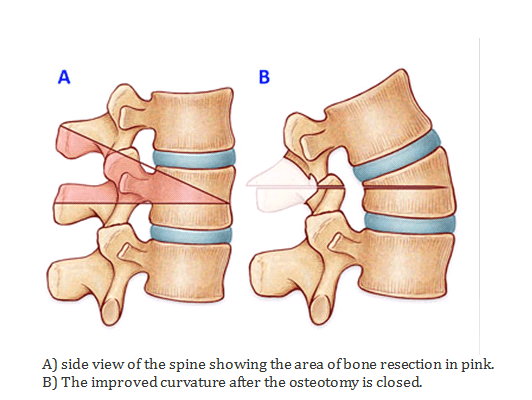
- Pedicle Subtraction Osteotomy (PSO) – Another form of an Osteotomy, the PSO procedure again begins with general anesthesia, and the patient being placed face down on a specialized operating table. An incision is performed in the center of the spinal area, in order to expose the vertebrae in need of correction. The surgeon will then place specialized screws known as pedicle screws, into the pedicles (a thicker column of bone that connects the back of the vertebra with the front) above and below the vertebrae in question. The surgeon will then remove processes from beneath the pedicles of the targeted vertebra in order to create a hollowed-out space in the area. Using a series of different techniques, the area is then closed up, and rods are placed into the pedicles screws in order to make sure the surfaces of the bone are able to meet one another. This closes off the wedge and ensures that the newly aligned region of the spine is going to be held in place. Over time, the bones fuse together, into one solid piece and provide lasting stability to the vertebra.
- Vertebral Column Resection (VCR) – The third form of a Spinal Osteotomy, the VCR is done in order to correct some of the most severe spinal deformity issues amongst patients. This procedure allows for the most substantial correction – often 80 degrees or more, while also removing the most bone tissue. Most commonly done from a posterior approach, the surgeon will make an incision in the back, exposing the vertebral column. Again, both above and below the vertebra in need of correction (removal), pedicle screws are inserted. The vertebra is then slowly removed, piece by piece – including the lamina, the facet joints, pedicles and more. Often, rods must be placed at this point, in order to hold the spine in place, as the surgeon carefully removes the other sides of the vertebra or any other vertebra that might be in need of correction. Once all is removed, the surgeon will carefully realign the spine. Once the proper alignment is achieved, an implant is placed, either a solid bone graft or piece of hardware filled with a small bone graft that will slowly grow into the space. Once completed, permanent rods are placed into the pedicle screws, and additional bone graft materials are placed in order to close off any gaps in the area. The hardware is only there for temporary stability; over time as the bone graft grows it will provide the long-term structure.
For more information on Spinal Osteotomies or to schedule a consultation, about your spinal issues, be sure to contact Dr. Varma today.